Projects / NMEATouch20 / Test setup
Test setup
NMEATouch20 was developed and tested over three years aboard a yacht in northern Europe — busy shipping lanes, container ships, tankers, and ferries encountered regularly throughout development.
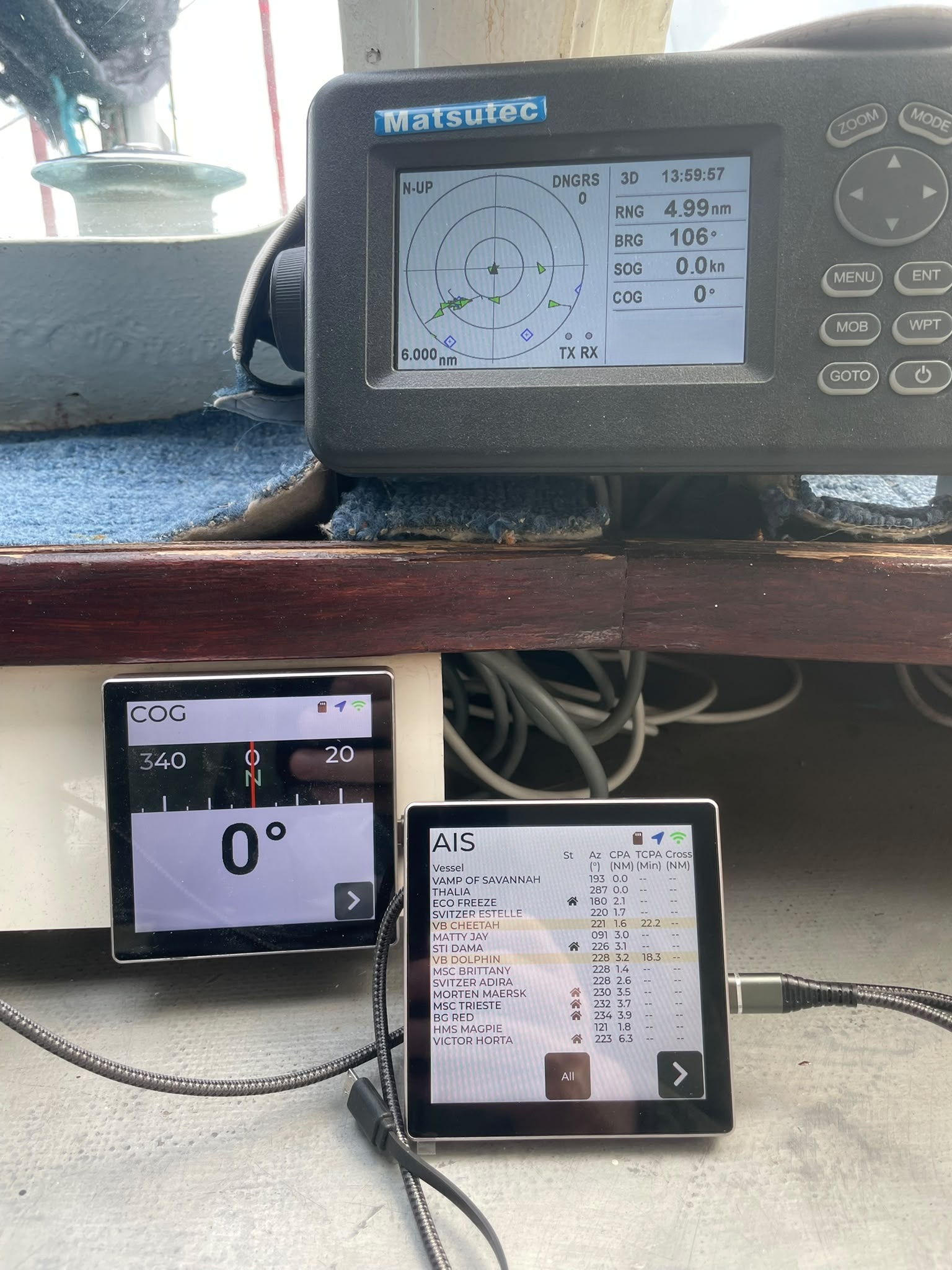
The test setup. Matsutec HP 528A above, two NMEATouch20 units below. VB DOLPHIN (highlighted pink) has breached the minimum separation threshold.
The AIS source — Matsutec HP 528A
The AIS data source for testing was a Matsutec HP 528A — a Class B AIS transponder with a built-in GPS and a small radar-style display. It transmits and receives AIS, outputs NMEA 0183 sentences over a serial connection. At time of writing it costs around £270–£300 new. It is widely available from Chinese suppliers — if buying from an unknown seller, verify the model number carefully; if the price seems too good to be true, check the listing thoroughly before purchasing.
The Matsutec was connected to the NMEA WiFi Bridge, which put its NMEA 0183 output — including AIS messages and GPS position — onto the boat WiFi as a UDP broadcast. The NMEATouch20 units simply connected to that network and received the data stream.
This is a very typical setup for a small yacht: a Class B AIS transponder with a serial NMEA output, bridged to WiFi, feeding one or more display devices. No NMEA 2000 bus, no expensive chart plotter — just a £4 ESP32 bridge and a £25 touch display alongside an existing AIS unit.
Encounter history in use
After three years of testing, the SD card encounter log shows its value. Tapping any vessel in the AIS list brings up its detail screen, including every date you came within 1 mile of that vessel and in which months and years those encounters occurred.
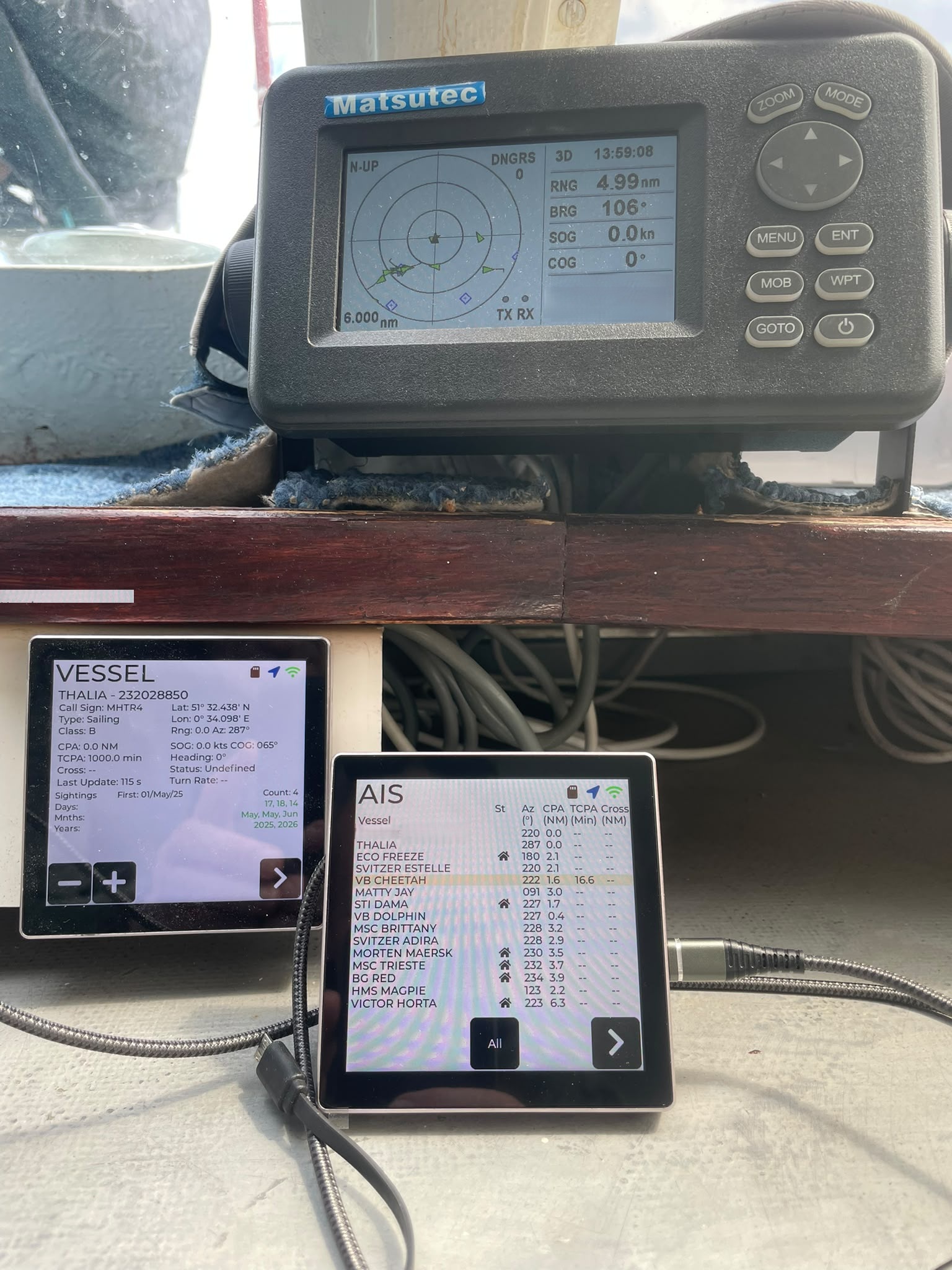
Vessel detail for THALIA. The encounter log shows 4 sightings on days 17, 16, and 14 across May and June, 2025–2026.